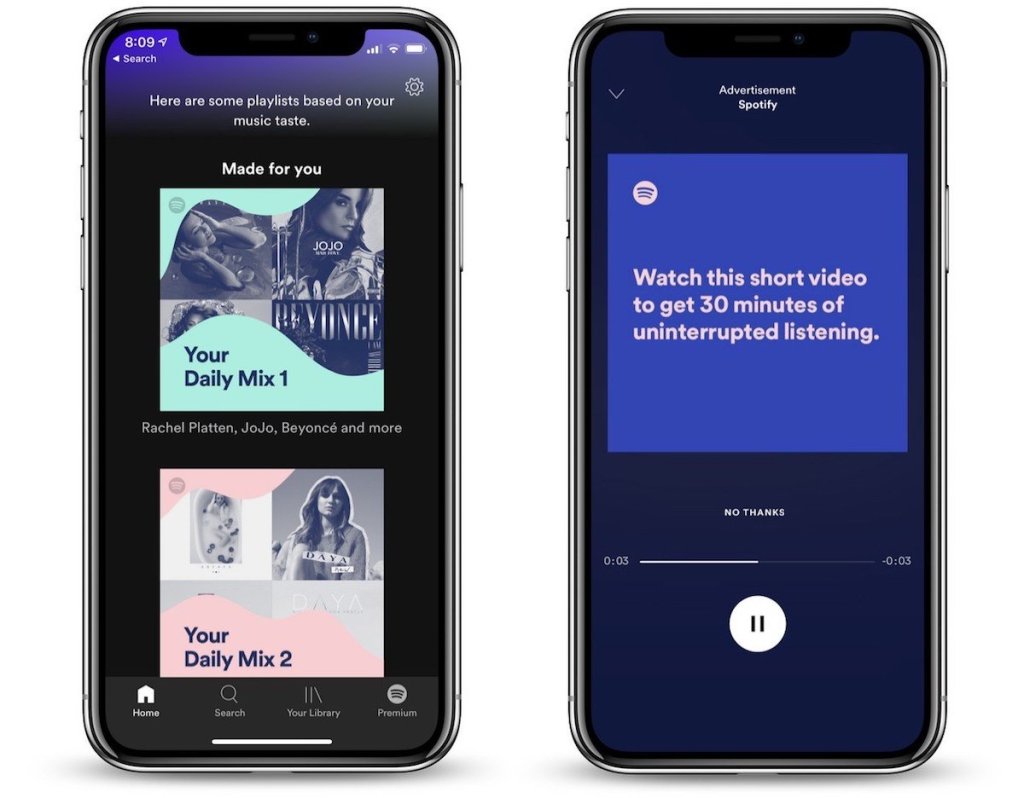
Imagine having an advertisement pop up while listening to your favourite song on Spotify. Imagine being forced to watch an advertisement while enjoying your favourite drama on Viu. Imagine having not enough storage to store your files on Dropbox. Sounds all too familiar right? To put it simply, this is called a “freemium” model.

In the words of Vineet Kumar, “Freemium“, a combination of “free” and “premium”, has been a very popular business model that is used by many internet start-ups and smartphone application developers. Essentially, users are granted the most basic features at zero cost, and gain access to additional features by paying a subscription fee.
According to ProfitWell, freemium is an acquisition model and not a revenue model. It focuses on acquiring customers quickly. As such, one of the main challenges for businesses using this model is converting customers into paying for premium services.
Applications such as Spotify and Dropbox are great examples of successful freemium companies. The concept is that when users likes the free version of the service, and understand the perks of upgrading to premium, they would pay more for a better version.
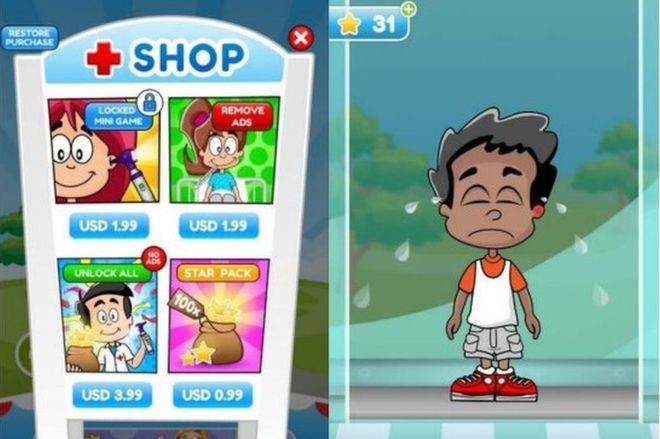
Well, I’m pretty sure most of us are guilty of spending a little money to earn that extra life on games, or going ad-free while listening to music, right? So how are businesses so successful in getting customers to pay for their premium products or services?
Let’s break it down. I’ll be using a hot dog stand as a simple analogy to illustrate my points.

#1 PRODUCT VALUE
You are sure that your hot dog is the best one around.
The success of freemium businesses starts from the base product/service that they offer to customers. If your base product/service doesn’t solve an immediate need/pain, then it doesn’t possess a high product value, vice versa. Companies such as Spotify has a high product value as they provide users with high quality music anytime, anywhere. In turn, users are more inclined to open their wallets for its premium services. According to Karen Allen, “People pay for premium content when it replaces an existing behavior at a lower price and with equal or greater convenience.”

#2 EASE OF PRODUCT USE
Your customers know what hot dogs are, how to eat it, and how it satisfy their hunger.
Freemium businesses usually have products/services that are simple enough for users to understand and educate themselves. The key idea for freemium businesses is to keep cost as low as possible. Also, as products/services are free, any slight obstacle might deter users somewhere else. IT’S THAT EASY TO LOSE THEM. Thus, successful freemium businesses usually has products/services that reliable and easy to use.

#3 MARKET PRESENCE
You position yourself at an area with huge crowds – people are hungry for your hot dogs.
According to Psych Guides, “Overall, 50% of mobile gaming revenue came from the top 10% of mobile gamers making purchases. These heavy spenders, termed “whales,” have been directly compared to the “big fish” courted by casinos. To generate vast profits, freemium games don’t have to hook everyone; instead, they only need to attract a small fraction of die-hard fans”. Therefore, successful freemium business usually possess a strong infrastructure to serve the mass market.

However, freemium definitely isn’t for everyone. Many freemium businesses failed due to being in the wrong market. Brett Nelson stated that, the right market should consist of customers that are already paying for a solution to a problem and having a under-served segment in the market.
TechWyse also stated that, reasons for upgrading is not compelling enough, where failed freemium businesses are unable to balance the value that users get for free, and the service users get when they upgrade.
Food for thought! Say Whatsapp and Instagram suddenly pose a price of $5 a month to use their service, would you pay? Let me know your thoughts below!
Cheers.
 THE ROCKET MARKETER
Wow! I actually never knew of this word “Freemium”! Through your post i found out that I have been using multiple freemium models like Spotify and Netflix. Also, i realised that some of the mobile games i play are also using the “Freemium” model as they allow you to download and play for free, but with limited features unless you pay for it. Personally, i decided to pay for premium because of the value that it provides. For example, Spotify removes ads, provides higher quality of music and also allows us to listen offline, which i feel is very worth for the price they are charging me.
If Whatsapp were to charge me $5/mth, I would gladly pay because its so essential for me. However, i can’t say so much for my parents who are in the older generation and they traditionally don’t like to pay for free stuff.
LikeLiked by 1 person
Hi Lesly, thanks for the reply! Exactly my sentiments on why I pay for premium.
Interesting how you talked about the topic on generation which never crossed my mind. For me I would also pay for such services since it has been part of my daily routine to use them. Charging $5 wouldn’t be much of an issue if I utilize them most of the time.
Like you mentioned, the older generation in general don’t like to pay for free stuff, which in my opinion, lies in value certain products/services provide. Different people define “value” differently. Hence, the older generation might find services such as Spotify to be off lesser value, and will not pay to upgrade. Of course, there are older people who are on the other side of the spectrum, take my parents for instance, they are willing to pay for upgrades on Viu just so they can watch their Korean drama series without interruption. Again, it is about how people perceive “value”.
LikeLike
Hi there! This post has been so informative and made me thought a lot about what is actually being offered these days! For example, your last question as to whether would I pay for a service that has been free all these and the company makes changes, I may look for different alternatives but I’m not sure about you cause you seem like a person who is willing to pay for premium services, I do but probably not as much unless I really stand to benefit from it.
LikeLiked by 1 person
Hi Nikki, thanks for the reply! Yes, I believe some people take into account the value these businesses provide for them. In fact, no wrong with that! To me, because I used these applications so often, the value that they provide is definitely worth more than $5.
Like you mentioned, alternatives. In today’s context, the internet is so widespread that alternatives are everywhere. One can easily find alternatives of a certain product/service just by searching the web. Again, this is why Freemium models are difficult to operate in a sense where alternatives are everywhere, what makes your product/service stand out then?
LikeLike
Very interesting and insightful blogpost. What a good read!
In your post you were saying that social media is important for businesses in the current time, would you recommend a platform for new businesses to get started on? Thanks.
LikeLiked by 1 person
Hi Brian, thanks for the reply! Well, I feel that this question touches on a much broader topic. With so many factors affecting what kinds of platforms should new businesses adopt, it would be difficult to narrow it down to one without much background of the business.
Among all the digital business models that are out there, every model satisfies different needs and has different pros and cons. Take for instance, a merchant model vs subscription model. Both of these models serves totally different purposes. Hence, it really boils down to what business it is, and what are the objectives of the business.
LikeLike
Hi there, very insightful stuff! I would definitely pay the 5 bucks as these are applications I use regularly. One question though, if freemium models are not meant to earn revenue in the short run, why are businesses still using them?
LikeLiked by 1 person
Hi Shane, thanks for reply! The basic understanding of freemium models as I’ve mentioned, is to acquire customers as quick as possible. Hence, it is focused on attracting a huge customer base before the idea of earning revenue. so why are businesses using them then?
According to a Harvard Business Review article, firstly, free features are a potent marketing tool which allows a new venture to scale up and attract a user base without expending resources on costly ad campaigns or a traditional sales force.
Secondly, the monthly subscription fees typically charged are proving to be a more sustainable source of revenue.
Thirdly, customers have become wary of cumbersome cancellation processes and find indefinite free access more compelling.
Of course these are just a few reasons why businesses operate freemium models, you might want to do your own research as well!
LikeLike
hello interesting read! What do you mean by an acquisition model actually? and what are some disadvantages of operating a freemium model?
p.s. I would definitely pay the $5 for sure!
LikeLiked by 1 person
Hi Jerilyn, thanks for the reply! Acquisition model according to ProfitWell, is a model build to acquire customers as quick as possible. Revenue model on the other hand is a framework that aims to generate revenue. Some key disadvantages of operating a freemium model could be:
1. Fixed cost coverage – Any business has a certain amount of fixed costs, and if the premium-priced packages do not generate enough revenue to offset the fixed costs, then the business will not do well
2. Value perception – Since the basic package offered by the seller is free, customers might get the perception that all versions offered by the seller are worth very little
3. Competition – The freemium model is one that any number of competitors can also use, which may increase price competition for the premium version of the service provided
Of course, these are just some disadvantages, you might want to do your own research to find out more!
LikeLike
Who doesn’t like free items? Answer a survey and get $10. Sure, if i can do them as many times as I want, I would! To me, free will help you attract consumers for a start, but getting them to further spend money will not be easy. For example, I am always attracted by mobile applications that are free to download. However, when they prompt you to upgrade to premium, it’s quite a turnoff. I wouldn’t say I will not spend a single cent on these applications. However, they must have features that I certainly need or it will be hard for me to take out my wallet. Netflix would be a good example. We have to pay our monthly subscription but it cant be quite costly if you watch it alone. Hence, for the value, many tend to share their accounts and pay a lesser fee as compared to individual. Have you paid for something that is very valuable, and still ongoing?
LikeLiked by 1 person
Hi there, thanks for the reply! Yes, great point on converting customers to be paid users. Like I’ve mentioned in my post, high product value plays a huge role in operating freemium models. The better the product/service is, the more inclined users will be in upgrading. Operating freemium models is all about acquiring as much customers as possible, and convincing them to convert, which is where the challenge is for most businesses; where many failed in doing so as users just do not find the value in upgrading.
Of course! In fact, I am a subscriber of several platforms such as Spotify and Dropbox to name some, and as embarrassing as this may sound… on some games too..
LikeLike